
Author: Simone Pittella
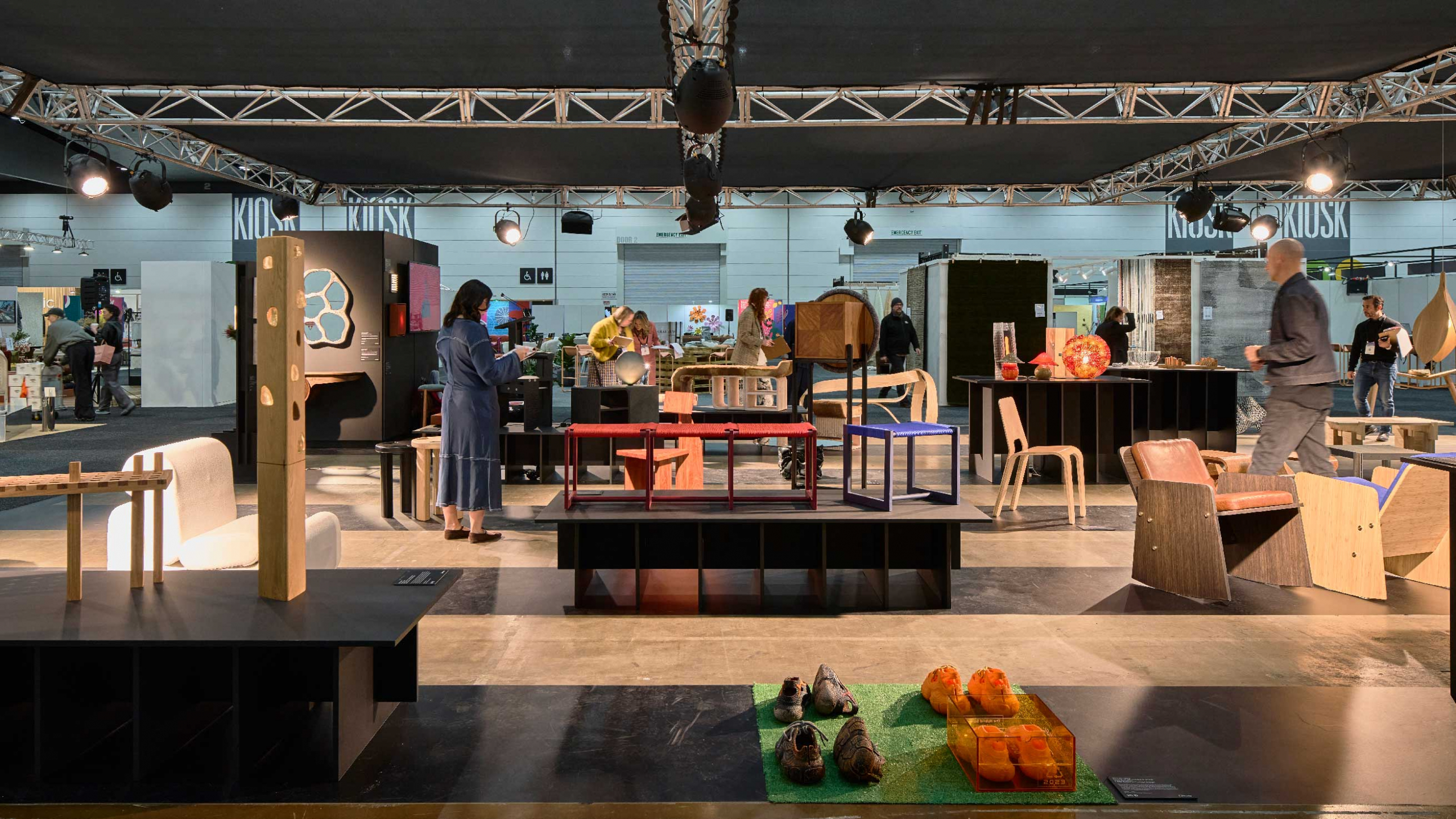
The 2026 VIVID Emerging Designer Awards exhibition at Decor + Design, Melbourne.
There are moments in our industry that remind us why design matters.
For me, one of those moments came when I was invited to join the judging panel for the 2026 VIVID Emerging Designer Awards at Decor + Design in Melbourne.
I have spent much of my working life alongside architects, interior designers, craftspeople and manufacturers. I am accustomed to considering how an idea moves from a drawing or prototype into something that can be made, specified, installed and lived with.
Judging VIVID offered a different perspective. It provided an opportunity to step back from the demands of production and spend time with ideas at an earlier stage—when a designer is still questioning materials, processes, behaviours and familiar forms.
What impressed me most was not simply the appearance of the work. It was the conviction behind it.
A platform for emerging Australian design
VIVID is Australia’s longest-running design competition for emerging talent and is now entering its third decade. Curated by Daniel Dalla Riva of Latitude Group, the awards have assisted more than 1,300 designers and presented more than 1,500 products, helping early-career designers gain exposure to the wider design industry.
The 2026 exhibition brought together work across Furniture, Lighting, Object, Concept, Colour and Student Design, together with the Authentic Design Alliance Award of Merit and the Judges’ Choice Award.
Walking through the exhibition, there was an impressive diversity of thinking. Some projects were quiet and highly resolved. Others were speculative, provocative or deliberately challenging.
Together, they revealed an emerging generation deeply interested in materiality, adaptability, local production, sustainability and the emotional relationship between people and objects.
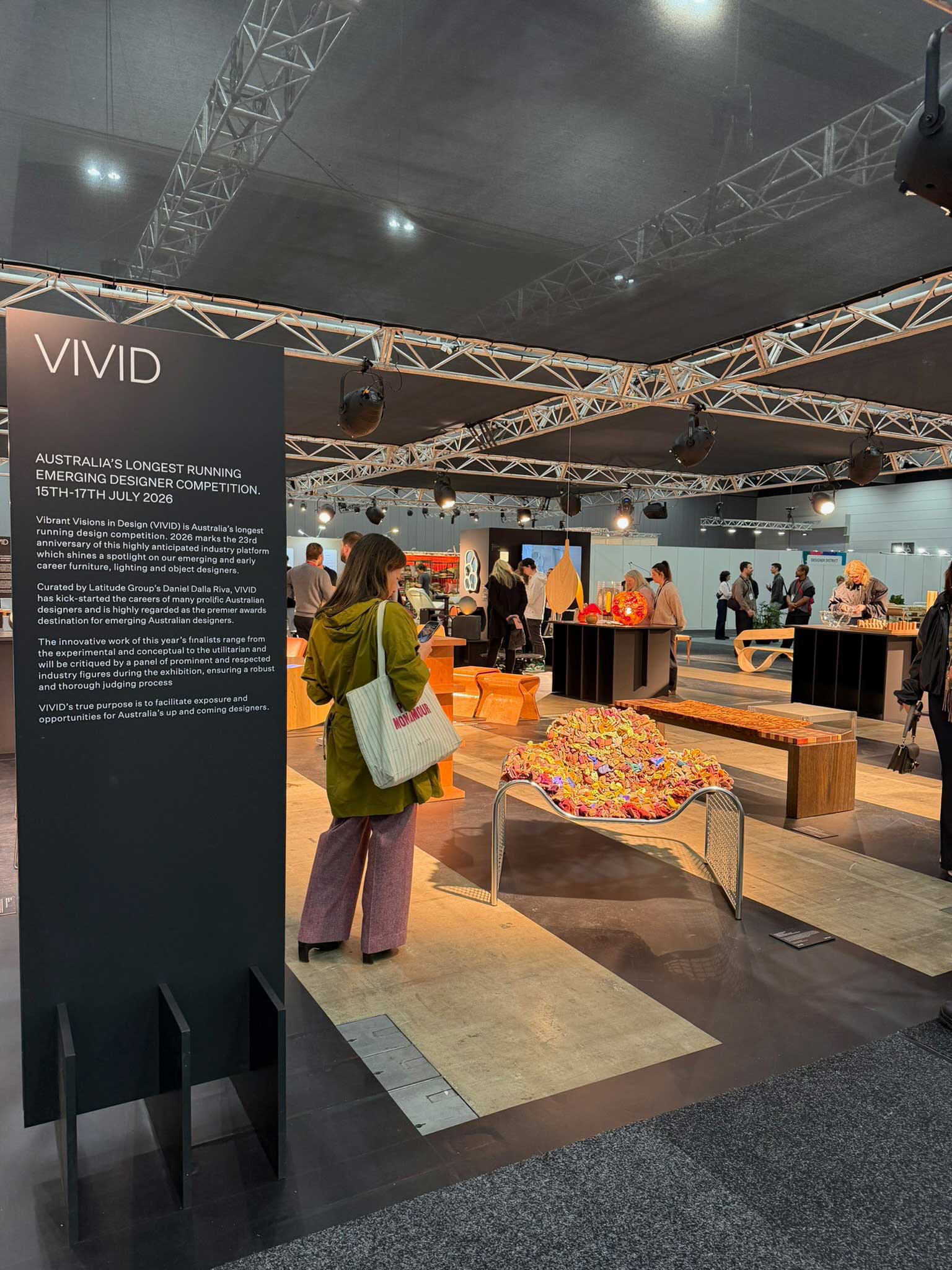
VIVID is Australia’s longest-running competition for emerging designers.
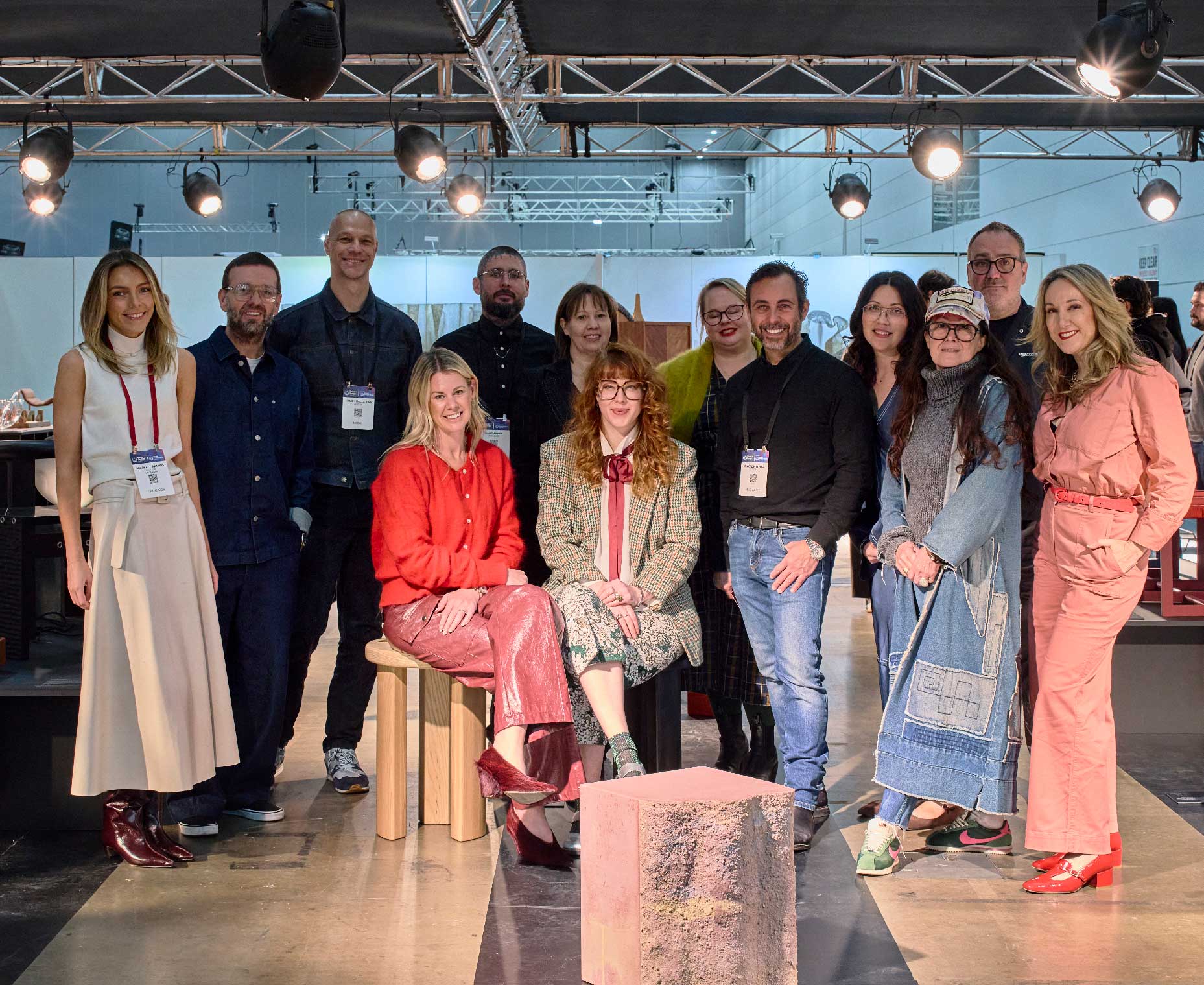
The exhibition brought together experimental materials, resolved products and speculative ideas.
Judging beyond appearance
As judges, we were not simply selecting the pieces that photographed best or made the strongest first impression.
We considered originality, craftsmanship, function, material intelligence, technical resolution and the potential for an idea to develop further.
My own perspective naturally came from manufacturing and specification. I found myself asking whether the material strengthened the idea, whether the detailing was purposeful, whether the designer understood how the object would be made, and whether the work could remain relevant beyond the exhibition.
The strongest projects did not necessarily answer those questions in the same way. Some demonstrated immediate commercial potential. Others were more experimental. A number sat somewhere between sculpture, product and material research. That breadth is part of what makes VIVID so valuable.
The 2026 award recipients
The 2026 awards recognised outstanding work across Furniture, Lighting, Object, Concept, Colour and Student Design, highlighting the diversity of ideas presented throughout the exhibition. Category honours were awarded to Jacqueline Kaytar (Bark), James Morando (Linea), Noah Corban (Three Flow), Alex Berecz (HAL) and Carl Broesen (Loom Armchair), with commendations acknowledging many other exceptional designers. While every recipient deserved recognition, a handful of projects stayed with me long after the judging had concluded—not only for their craftsmanship, but for the clarity of thinking behind them.
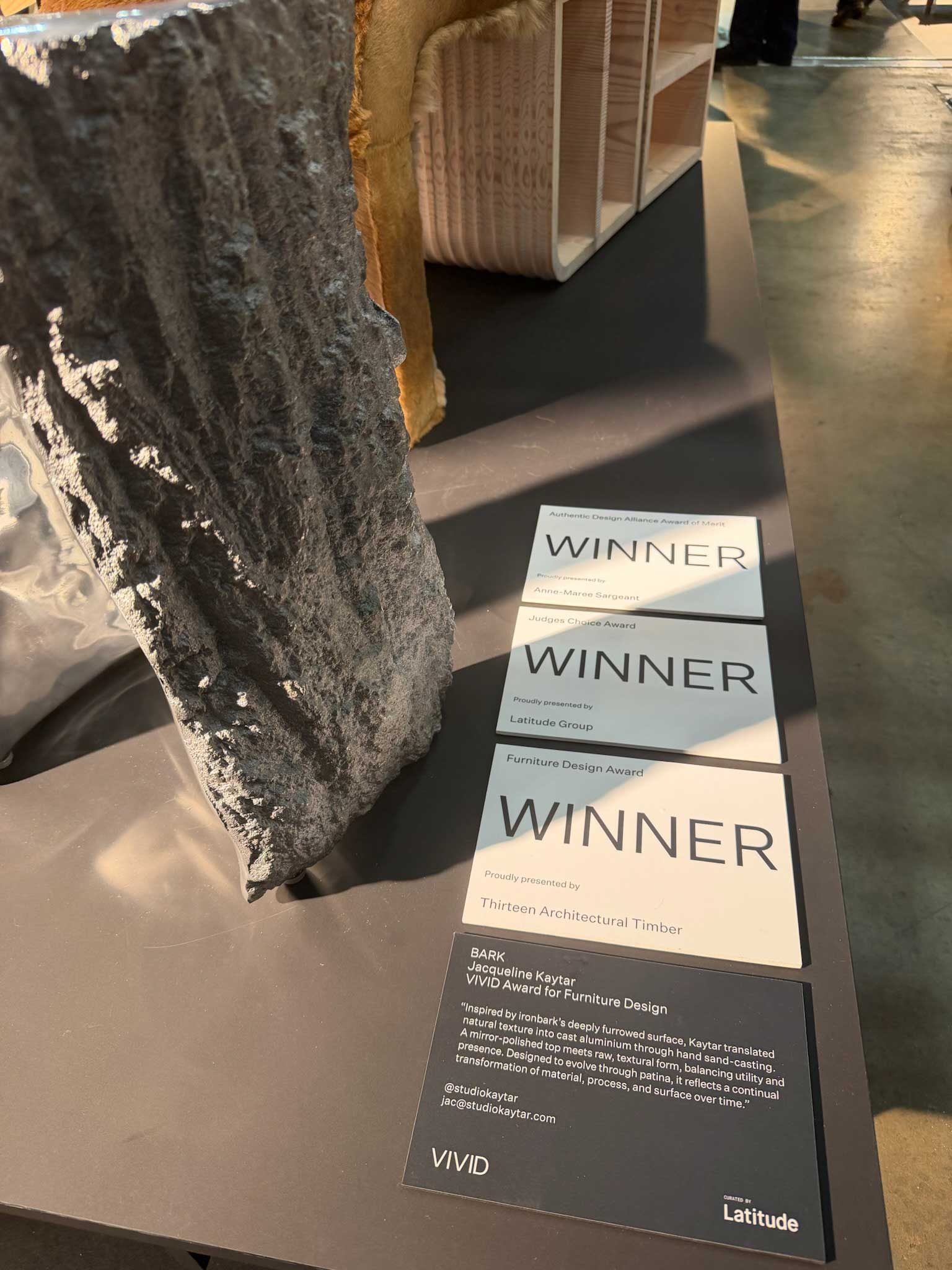
Bark received the Furniture Design Award, the Authentic Design Alliance Award of Merit and the Judges’ Choice Award.
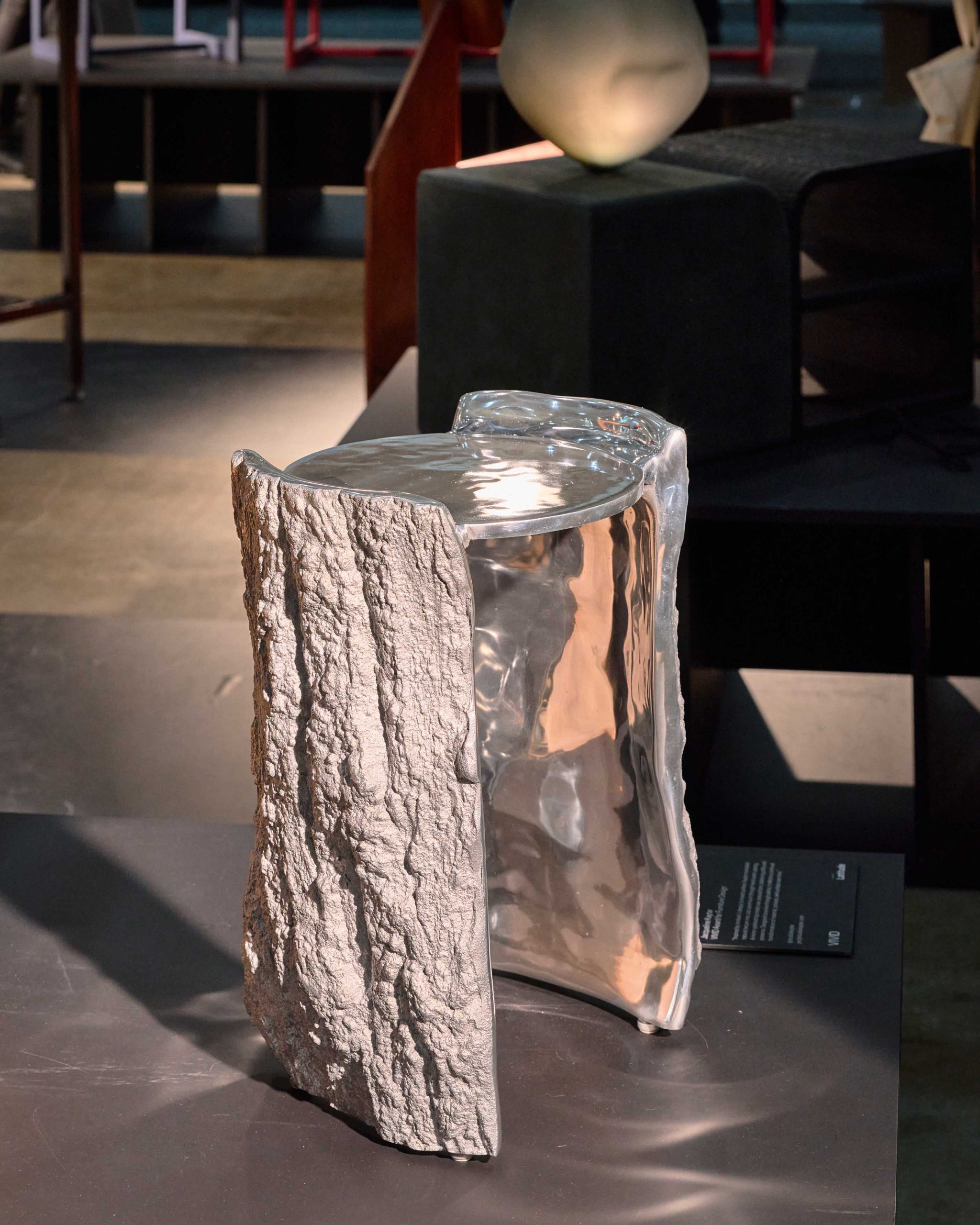
Bark translates the deeply furrowed surface of ironbark into hand sand-cast aluminium.
Bark — Jacqueline Kaytar
Some pieces reveal themselves immediately. Others become more meaningful through conversation. Bark did both.
At first, I was drawn to the contrast between the polished aluminium surface and the deeply textured structure beneath it. The top appeared almost liquid under the exhibition lighting, while the sides retained the rugged depth and irregularity of ironbark.
The object was sculptural, but it still carried the presence and usability of furniture.
After speaking with Jacqueline, the work took on another dimension. She spoke about transformation rather than reproduction. The intention was not simply to imitate bark in aluminium, but to carry the memory of one material into another.
“Nothing ever disappears; it simply changes form.” – Jacqueline Kaytar
That idea is present throughout Bark. The tree is no longer there, yet its surface remains. The texture moves from organic matter into cast metal. The aluminium itself will continue to change through touch, oxidation and time.
Nothing is treated as static. For me, that makes Bark more than a beautifully made object. It is a meditation on process, memory and material continuity.
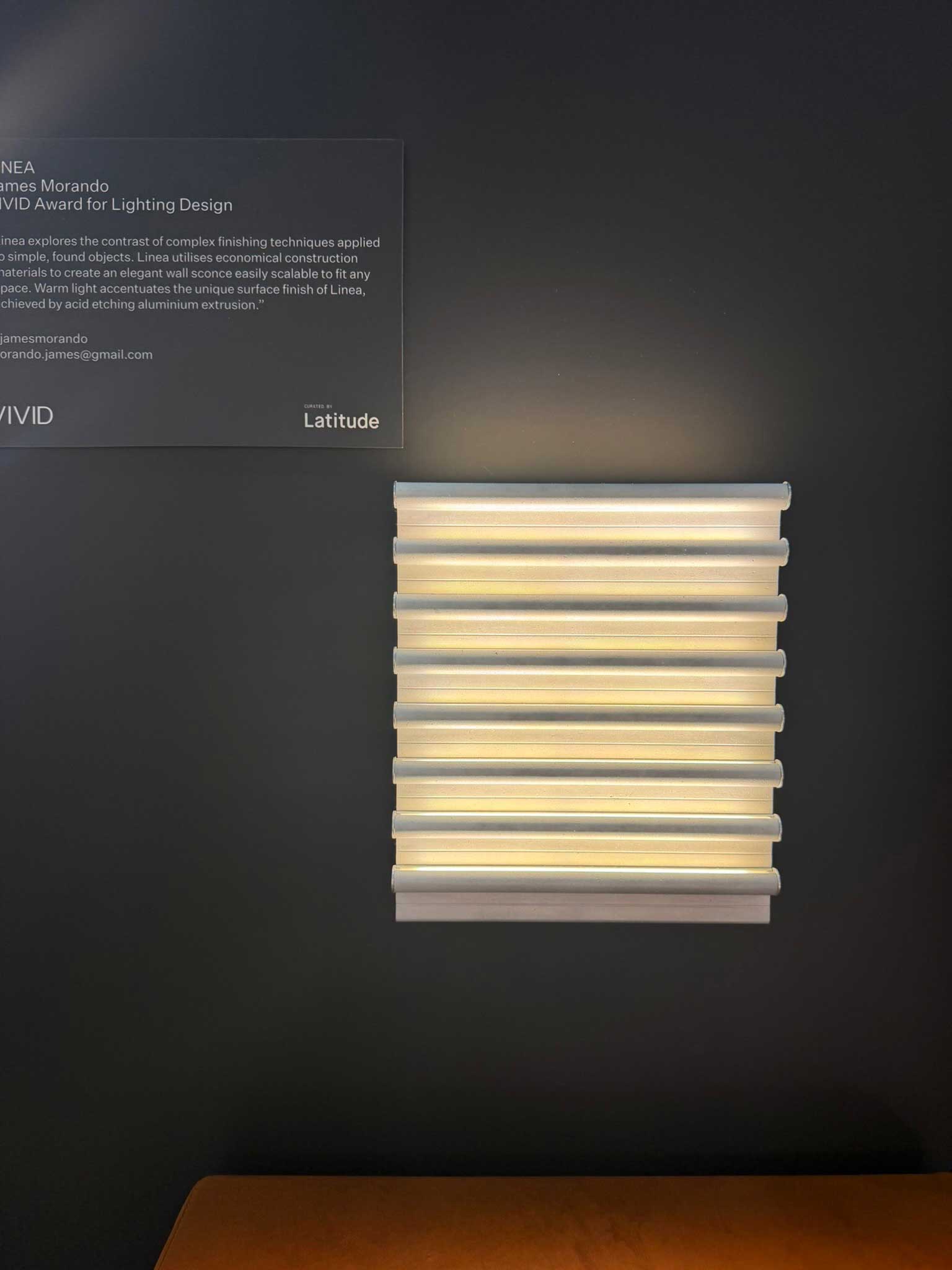
James Morando’s Linea uses acid-etched aluminium extrusion to create a refined architectural surface.
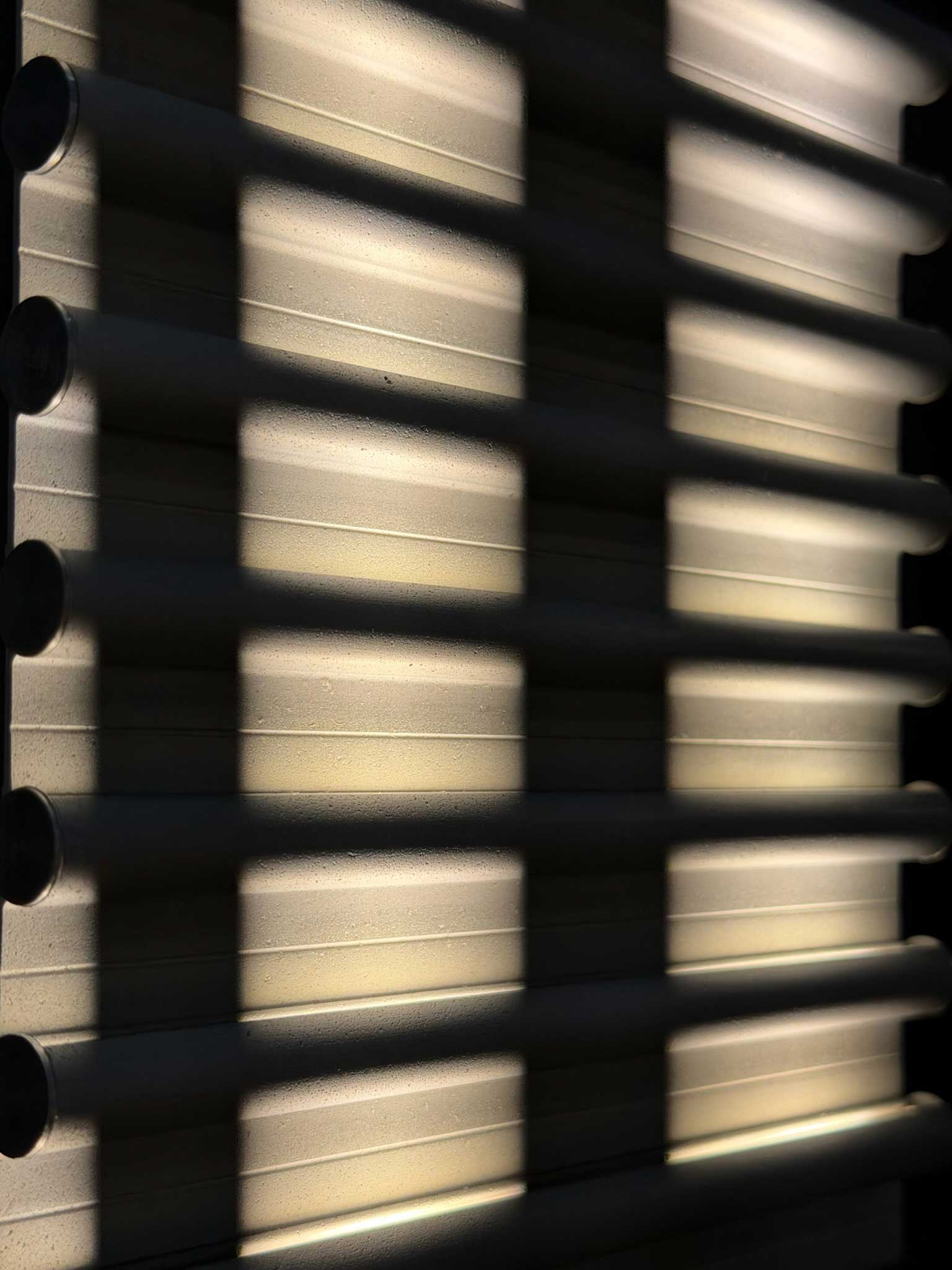
Warm light accentuates the etched aluminium and the rhythm of the repeated profile.
Linea — James Morando
Linea was one of the quietest works in the exhibition, and one of the most resolved. Its strength lies in restraint.
James has taken a simple aluminium extrusion—an economical, familiar construction material—and elevated it through acid etching, proportion and light. The result feels architectural without becoming severe.
As someone who works closely with architects and interior designers, I could immediately see its relevance to premium residential, hospitality and commercial interiors. It has the clarity required for specification, yet it still carries the individuality of a crafted object.
There were no unnecessary gestures. The form, finish and illumination worked together. Linea demonstrated something I value deeply: good design does not need to shout to establish its presence.
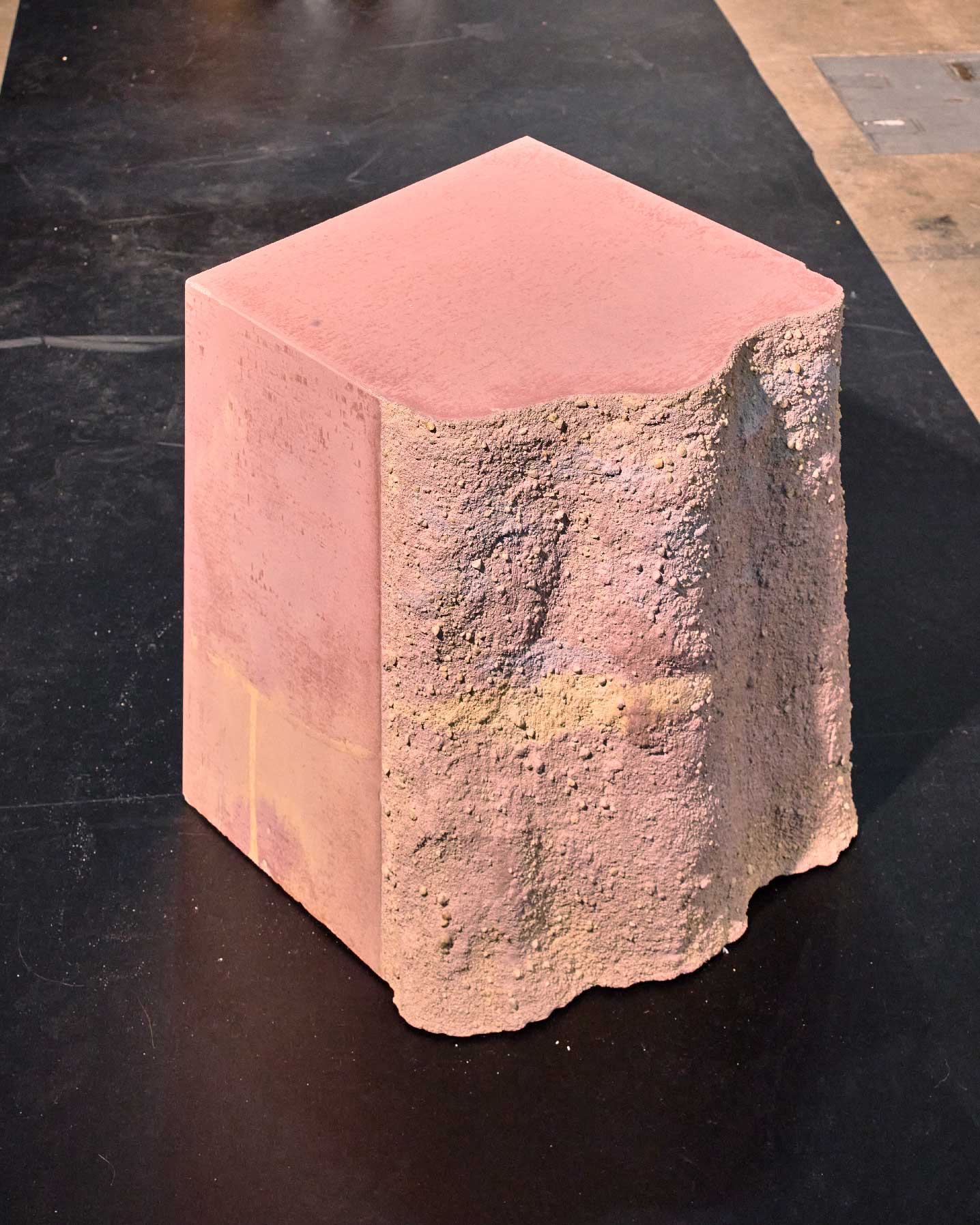
Imprint on Me explores natural hydraulic lime, oxide pigments and material-led colour.
Imprint on Me — Tara Burgess
Tara Burgess’s Imprint on Me challenged the familiar idea that colour is something added after an object has been formed. Instead, colour emerged through the material itself.
The piece was cast in a hybrid sand-formwork system using a custom limecrete mix and oxide pigments. Its soft pink, mineral and weathered tones were inspired by the Victorian coastline.
I was drawn to the tension between its simple geometry and the irregularity of its surface. The top appeared smooth and almost serene, while the sides revealed aggregate, pigment and the marks of the casting process.
Rather than disguising those variations, Tara allowed them to become part of the work. The result felt contemporary, but also connected to older construction materials and processes.
It was a strong reminder that sustainability does not need to appear technical or austere. It can also be tactile, expressive and beautiful.
Recession Coffee Table — Nina Lewis
Nina Lewis’s Recession Coffee Table was one of the most professionally resolved student works in the exhibition.
Made from solid American ash, the table draws on Constructivist and Brutalist references. Hand-chiselled recesses form the joints, while a contrasting end-grain inlay introduces a quieter layer of pattern and craftsmanship.
The proportions were calm and assured. Nothing appeared decorative without purpose. The detailing revealed itself slowly—the grain direction, the meeting of structural elements and the precision of the central inlay.
It felt less like a student prototype and more like the beginning of a lasting furniture collection. Its commendations in both Student Design and the Authentic Design Alliance Award of Merit were well deserved.
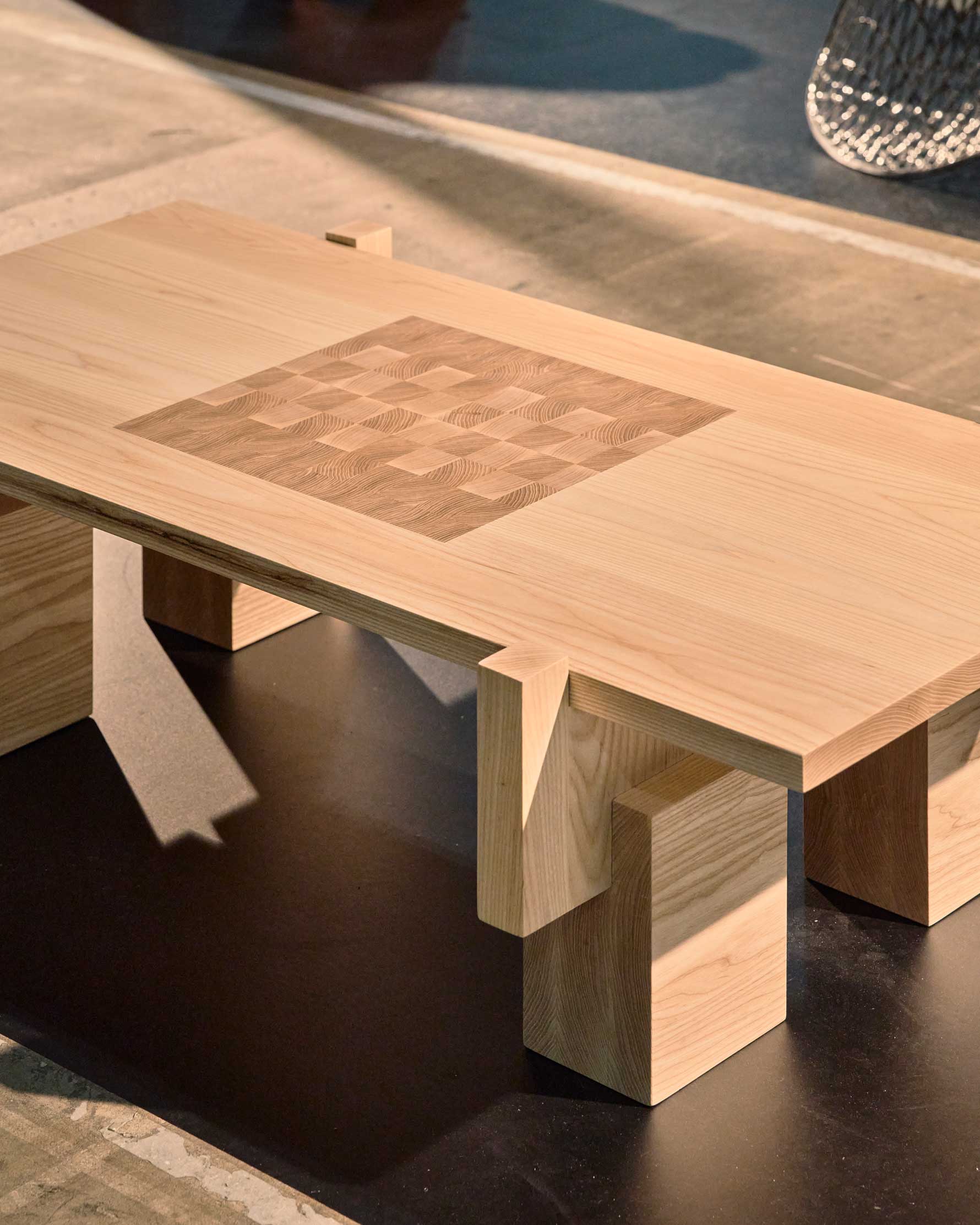
Nina Lewis’s Recession Coffee Table combines solid American ash, hand-cut joinery and a contrasting end-grain inlay.
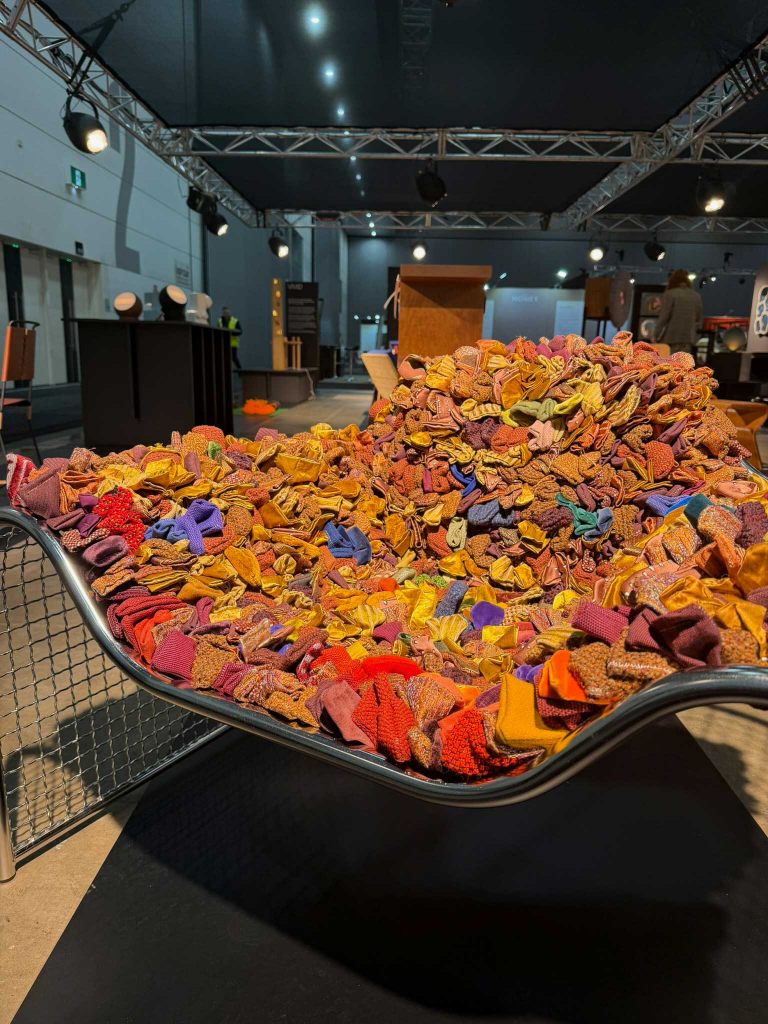
Carl Broesen’s Loom Armchair transforms textile offcuts into a richly tactile upholstery surface.
Material as a starting point
Looking back across the exhibition, one quality connected many of the strongest works.
The designers had allowed material to become part of the thinking rather than simply a means of executing a predetermined form.
In Bark, aluminium carried the memory of ironbark. In Linea, a familiar extrusion was transformed by light and acid etching. In Imprint on Me, pigment, lime and aggregate created colour from within. In Three Flow, cast aluminium became a tactile guide to daily ritual. In the Loom Armchair, discarded textiles became both upholstery and visual language.
These works did not conceal their processes. They made them visible.
“For someone involved in manufacturing, that is especially meaningful. The most enduring products usually begin with a genuine understanding of what a material can do—and an equal respect for what it should not be forced to do.” – Simone Pittella
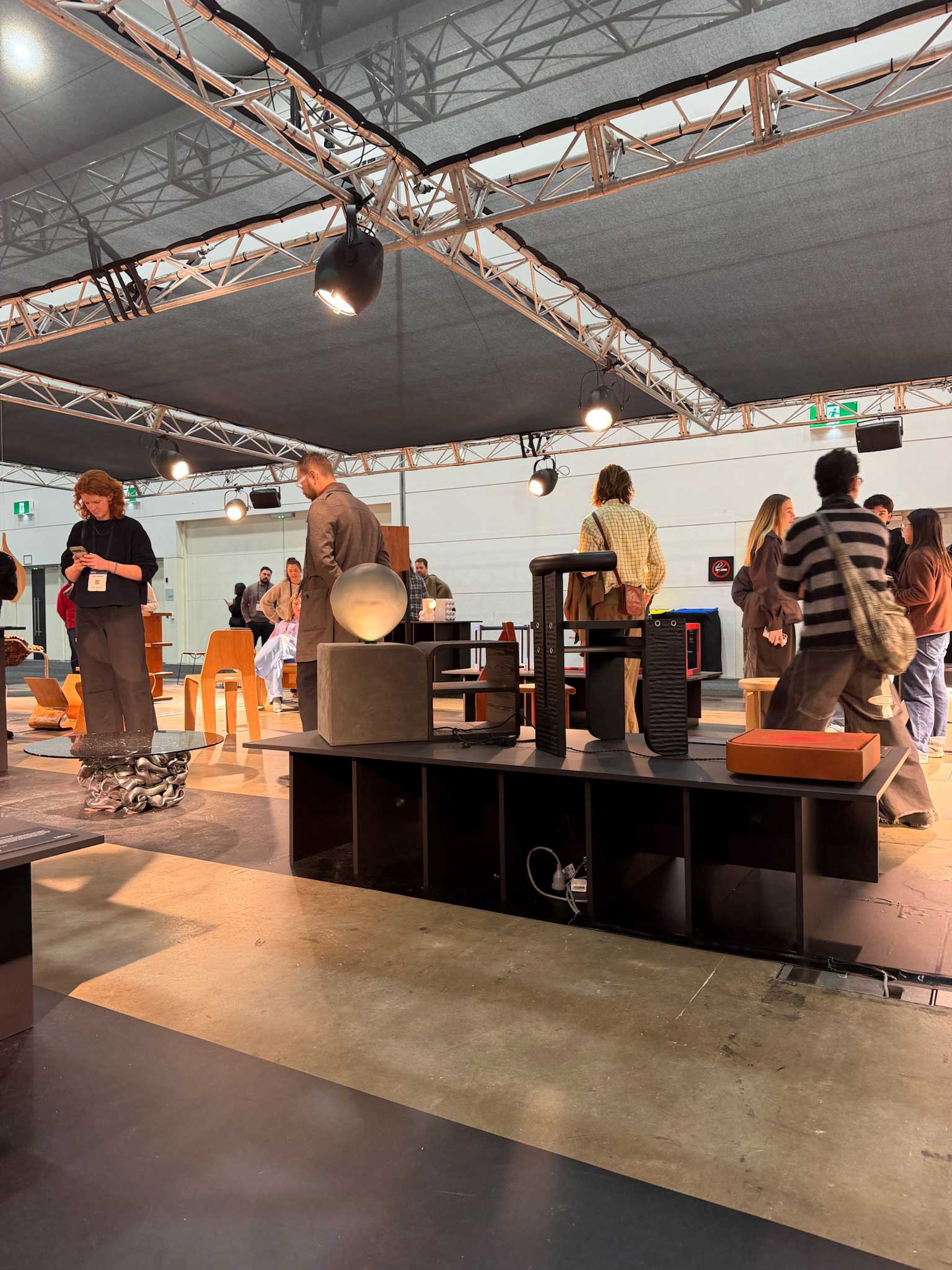
VIVID creates an important meeting point between emerging designers and the wider Australian design industry.
Why emerging design matters
Emerging designers bring a willingness to question assumptions that the wider industry can sometimes begin to accept.
Why should a supplement container feel clinical? Why should colour sit only on the surface? Why should inexpensive construction material remain visually ordinary? Why should imperfections be removed rather than celebrated? Why should furniture remain fixed when contemporary living is increasingly flexible?
Not every emerging idea will become a commercial product, nor should it.
Awards such as VIVID create space for experimentation before the pressures of production, pricing and the marketplace begin to narrow the possibilities. At the same time, they connect designers with manufacturers, specifiers, retailers and media who may help those possibilities develop.
That exchange is important. Design cannot progress through ideas alone. It also requires conversation, criticism, mentorship, manufacturing knowledge and opportunity.
Looking ahead
It was a privilege to participate in the judging process and to spend time with so many thoughtful emerging designers.
I left encouraged not only by the quality of the objects, but by the depth of thinking behind them. There was confidence in the work, but also curiosity. There was an appreciation for craftsmanship without nostalgia. There was a clear interest in local production, material responsibility and the role objects play in shaping everyday behaviour.
I would like to congratulate every winner, commendation recipient and finalist who took part in the 2026 VIVID Emerging Designer Awards.
I would also like to thank Anne-Maree Sargeant, Daniel Dalla Riva, Latitude Group, Decor + Design and my fellow judges for the invitation and for the discussions that shaped the final decisions.
The future of Australian design will not be defined by a single aesthetic or material. It will be defined by designers willing to look more closely, question familiar assumptions and continue transforming ideas into objects with meaning.
After experiencing this year’s VIVID exhibition, I believe that future is in very capable hands.
Official 2026 winners and commendations: Decor + Design — 2026 VIVID Winners
VIVID program background and statistics: Decor + Design — VIVID Emerging Designer Awards
Finalist descriptions: Decor + Design — 2026 VIVID Finalists


